Black Creek Area
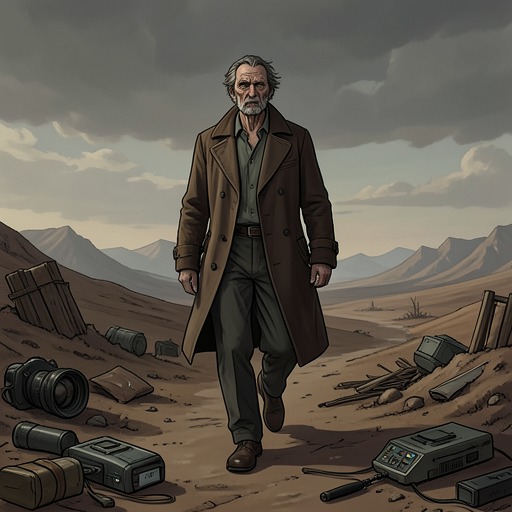
Earth AbidesBlack Creek Area is a mountain setting defined by the close presence of streams, pines, and wildlife and by the scattered human infrastructure threaded through them. It is where Ish conducts graduate research into the region’s ecology, and where the familiar signs of local life—fishermen on the road, an open store, a working power-house—first acquire an uncertain significance when they begin to disappear.
Setting and Human Footprint
Ish’s cabin stands in a remote part of the area, with no other resident within five miles. A rocky road follows the mountain terrain, while a rushing stream draws summer fishermen who drive up or walk along its course. Pine groves line the road as it descends from the cabin toward the Black Creek Power-house. The area is secluded, but not wholly apart from human use: the road, fishing traffic, store, and generators connect its woods and waterways to everyday routines.
The Black Creek Power-house is a particularly visible mark of that connection. When Ish passes it, the generators are still turning and water is still pouring out beneath the structure; a light remains on at the bridge. The scene presents electricity as an ordinary service whose continued operation depends on systems and habits that people rarely need to notice while they work. The power-house is both part of the landscape and a reminder that the apparent solitude of the mountains rests alongside maintained infrastructure.
Ish’s Research and Isolation
As a graduate student, Ish is writing a thesis on the ecology of Black Creek Area. His subject is the past and present relationship between humans, plants, and animals, a scope that makes the landscape more than a scenic refuge: it is the object of his systematic study. His work also gives a practical reason for going into the mountains alone. He cannot wait for a suitable companion to accompany him on every investigation, and he considers the danger manageable.
Solitude is also something Ish chooses. He likes to escape the difficulties of dealing with people, and the cabin offers that retreat. Yet isolation gradually becomes harder to distinguish from warning. He realizes that he has neither spoken with nor clearly seen another person for two weeks. The absence is striking because summer ordinarily brings fishermen through the area. Even a car heard on the road after dark, unusual enough to catch his attention, can be explained away as someone heading early to a favorite fishing stream. The landscape’s scattered signs of activity encourage both observation and speculation, but do not tell Ish what is actually happening beyond his cabin.
Roads, Services, and Unsettling Absences
The local pattern of access is made concrete by Ish’s trip down from the cabin. At the Johnsons’ store he finds the door unlocked and the owners away; with his fuel nearly gone, he takes ten gallons from the pump and leaves a check and a note. The transaction belongs to an ordinary world of trust and routine, but its unexplained circumstances join the missing fishermen and the nighttime car in a growing set of anomalies. Ish feels unease, then allows the bright day, his improving health, and the familiar road to restore his sense of normality.
At the Black Creek Power-house, the machinery appears to confirm that nothing has changed. The generators whir, water continues to rush out, and the bridge light is burning. Ish considers crossing to see someone and quiet his fears, but the ordinary appearance of the place reassures him before he does so. Black Creek Area thus becomes a setting where absence is initially legible only in small discrepancies: an empty cabin region, a closed-off human presence, and services still functioning without anyone visibly attending to them.
Ecological and Narrative Significance
The area’s defining tension is between Ish’s ecological attention and the limits of what he can infer from observation. His thesis asks him to study relationships across human, plant, and animal life, while his immediate surroundings offer a practical lesson in dependence: streams draw people, roads enable access, and a power-house turns moving water into electricity. Yet the disappearance of familiar visitors cannot be explained by the landscape alone. What Ish can record—the quiet road, the absent fishermen, the still-operating generators—does not at first disclose the scale of the change taking place beyond his isolated field site.
Black Creek Area therefore introduces the novel’s larger concern with the fragility of ordinary systems through a local, measured perspective. The mountains are not an empty wilderness: they contain work, travel, recreation, and infrastructure. Their remoteness allows Ish to live apart from other people, but it also delays his recognition that their absence may signal something larger than a temporary lull in local activity.